
How to Ease Separation Anxiety on the First Day of Daycare
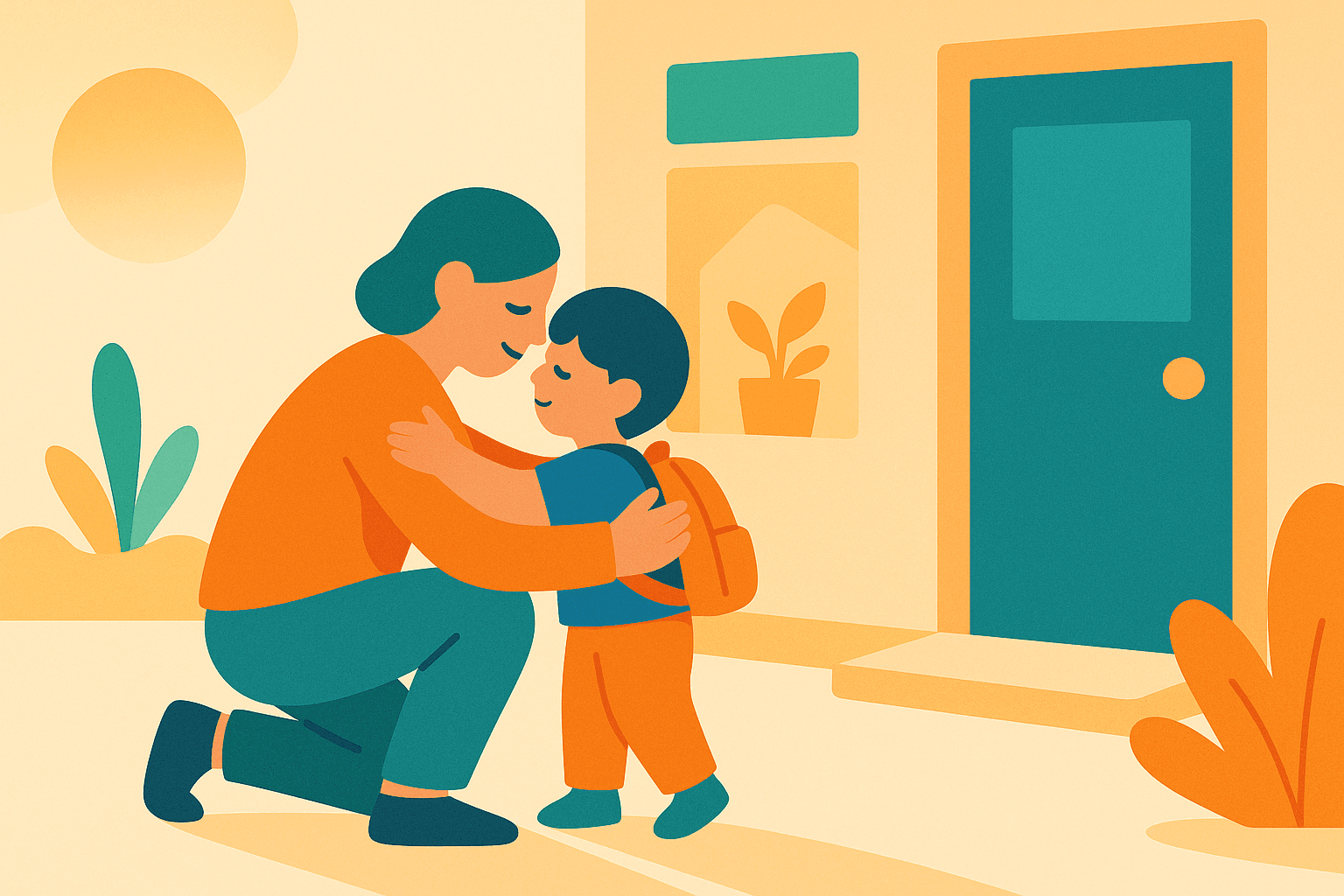
If your child cried at drop-off this morning, take a breath — you did not make a mistake, and you did not do anything wrong. Separation anxiety is a normal, healthy sign of a secure attachment, and it almost always improves within the first two weeks. It shows up because your child has correctly figured out that you are their safe person, which is exactly the outcome good parenting is supposed to produce.
That knowledge doesn't make the actual morning any easier, though. So here's what genuinely helps — from the weeks before enrollment, through the first tearful (and completely normal) goodbye, to what a realistic timeline for improvement looks like.
Before the first day
Visit the classroom together beforehand if you can. Let your child meet their teacher, touch their cubby, see where naptime happens, and get a feel for the room while you're still standing right there. Familiarity blunts a lot of the shock of the first real drop-off — it's no longer a completely unknown place, it's "the room with the caterpillar rug I already saw."
Practice short separations in the weeks leading up to enrollment — an hour with a grandparent, a morning with a sitter, a stretch at a friend's house. Building a track record of "goodbye always means hello again" pays off enormously once the real transition starts. Children build trust through repetition, not through explanation.
It also helps to talk about daycare in concrete, positive, low-key terms in the days before — not a huge buildup, just normal mentions. "Tomorrow you're going to your new classroom to play with the kitchen set and meet Ms. [Teacher's name]." Specific, calm, and matter-of-fact beats a big emotional speech every time.
On drop-off morning
Keep your goodbye short, warm, and consistent. A long, lingering goodbye — however well-intentioned — often makes separation harder, not easier, because it signals to your child that this is a moment worth worrying about. Kids are remarkably good at reading our anxiety even when we think we're hiding it.
Create a simple goodbye ritual and use it every single day: a hug, a specific phrase ("See you after nap time — I love you, have a great day"), and a wave at the door. Predictability is deeply comforting to young children, especially in a moment that otherwise feels uncertain. The ritual becomes the safe, known part of an unfamiliar routine.
One thing we'd gently discourage: sneaking out while your child is distracted. It might buy you an easier exit in the moment, but it tends to make children more anxious over time, because they learn that you might disappear without warning — which means they have to watch you more closely, not less. A clear goodbye, even a hard one, builds more trust in the long run than a quiet escape.
Trust the handoff
It's genuinely hard to walk away while your child is crying. We know. In our experience, though, most children stop crying within a few minutes of a parent leaving — the parting itself is almost always harder than the actual staying. A teacher scooping your child up, naming their feelings ("You miss your mom, that makes sense"), and redirecting them toward something interesting usually does the trick faster than you'd expect.
We communicate through the ProCare app throughout the day — naps, meals, diapering, and mood all land in your pocket without you having to wonder. If you're anxious about how the morning actually went after a hard goodbye, that update is usually the fastest way to put your mind at ease. Most parents tell us the 10 a.m. photo of their child happily playing does more for their nerves than anything else could.
It's okay if it's hard on you, too
Nobody talks about this enough: parents get separation anxiety too. Crying in the car, replaying the goodbye all morning, calling the front desk "just to check" — all completely normal, and nothing to be embarrassed about. You're allowed to feel it and still be doing the right thing for your family.
If it helps, give yourself the same grace you'd give your child. It's a real transition for you as well, even if no one hands you a sticker for getting through it.
What to expect, week by week
Week one is usually the hardest, and that's expected, not a sign anything is wrong. Tears at drop-off, maybe some clinginess at pickup, possibly a bit more tired or fussy than usual as your child processes a genuinely big change.
Week two typically brings noticeable improvement. Many children start walking in more easily, sometimes even distracted by a favorite toy or friend before you've finished your goodbye ritual. Naps and appetite tend to normalize as the daily rhythm becomes familiar.
By week three or four, most children have settled into their new routine, and separation anxiety fades into the background — though it can resurface temporarily after a break, illness, or schedule change, which is completely normal too.
If distress isn't improving at all after three or four weeks, or seems to be getting worse rather than better, that's worth a real conversation with your child's teacher — not because something is necessarily wrong, but because a good teacher can help you figure out what's actually going on and adjust from there.
Written by The Village of Learning Team
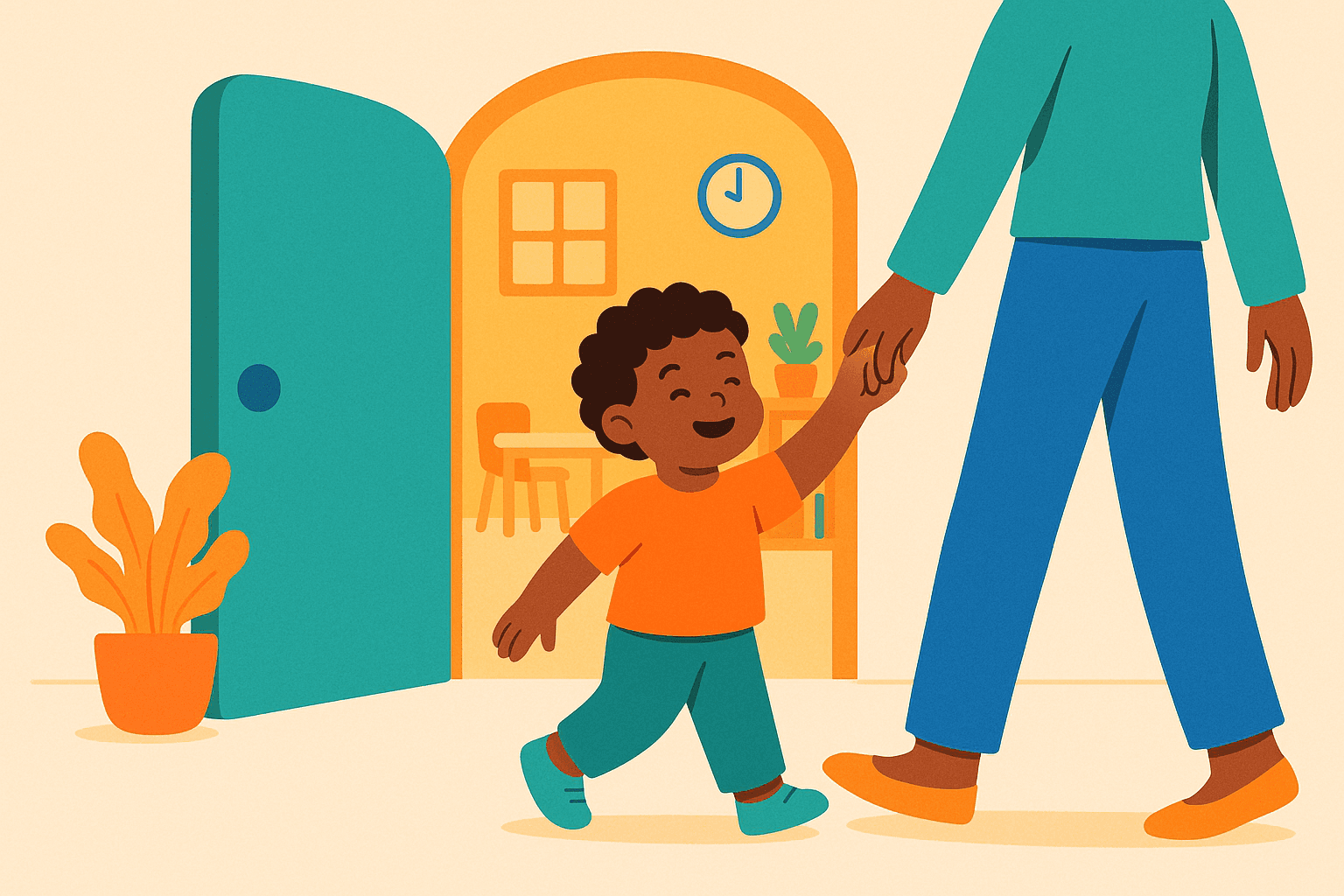


Let's find the right classroom for your child.
Tours are free, unhurried, and the best way to see if The Village of Learning feels like home. Spots fill quickly — reach out today.
Or call us at (225) 390-1136