
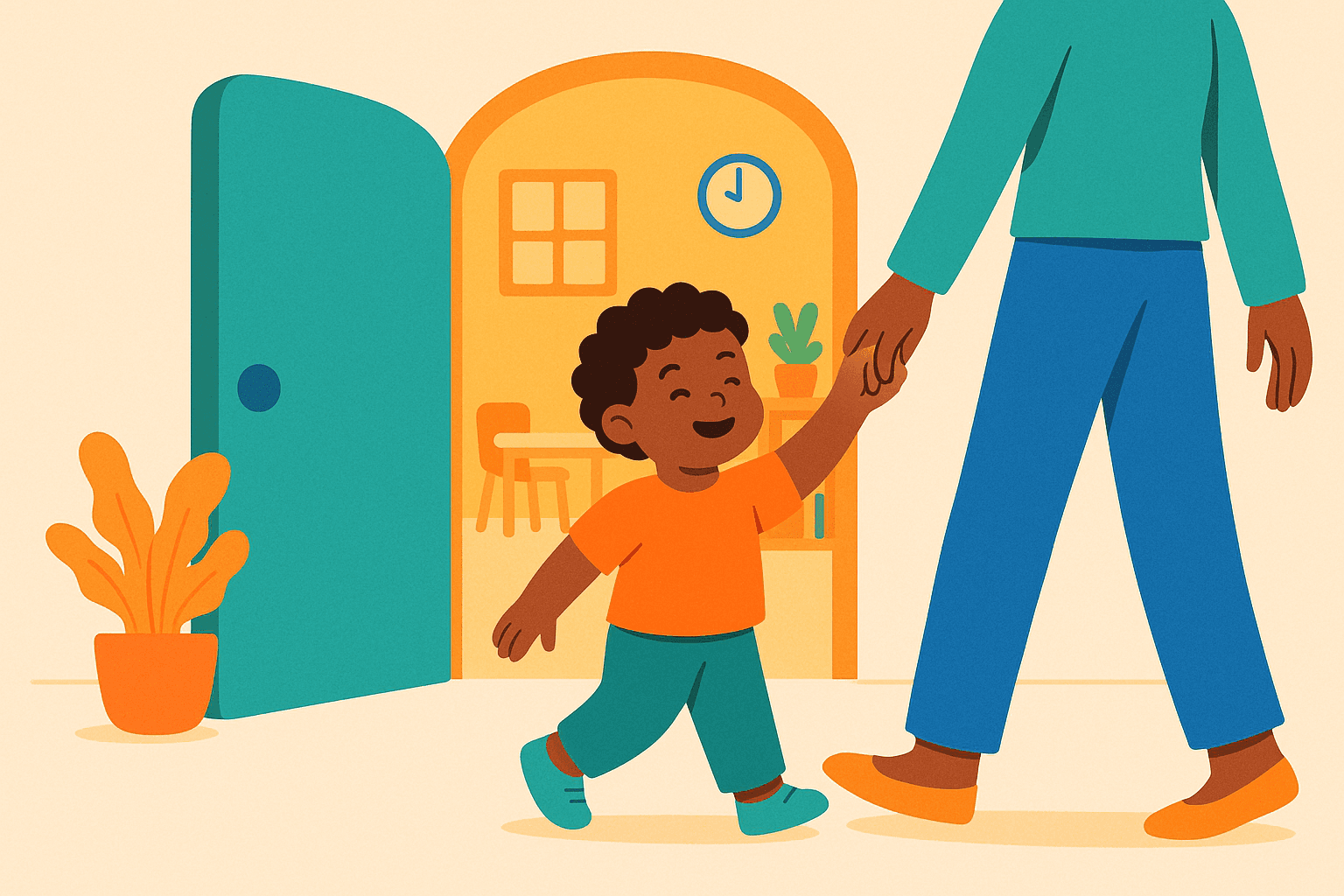
Every child develops on their own timeline, which is exactly why "my child just turned three" isn't the only — or even the best — indicator that they're ready for preschool. Age is a rough proxy for readiness, not a guarantee of it. We've watched plenty of just-turned-three-year-olds walk into a preschool classroom and settle in within days, and just as many wait a few more months before they're truly ready to thrive there.
After years of watching children make this exact transition, we've noticed a handful of everyday signals that matter far more than a birthday. None of them require your child to be perfect at any of this — readiness is about direction, not mastery. Here's what we actually look for.
1. They can separate from you, even briefly
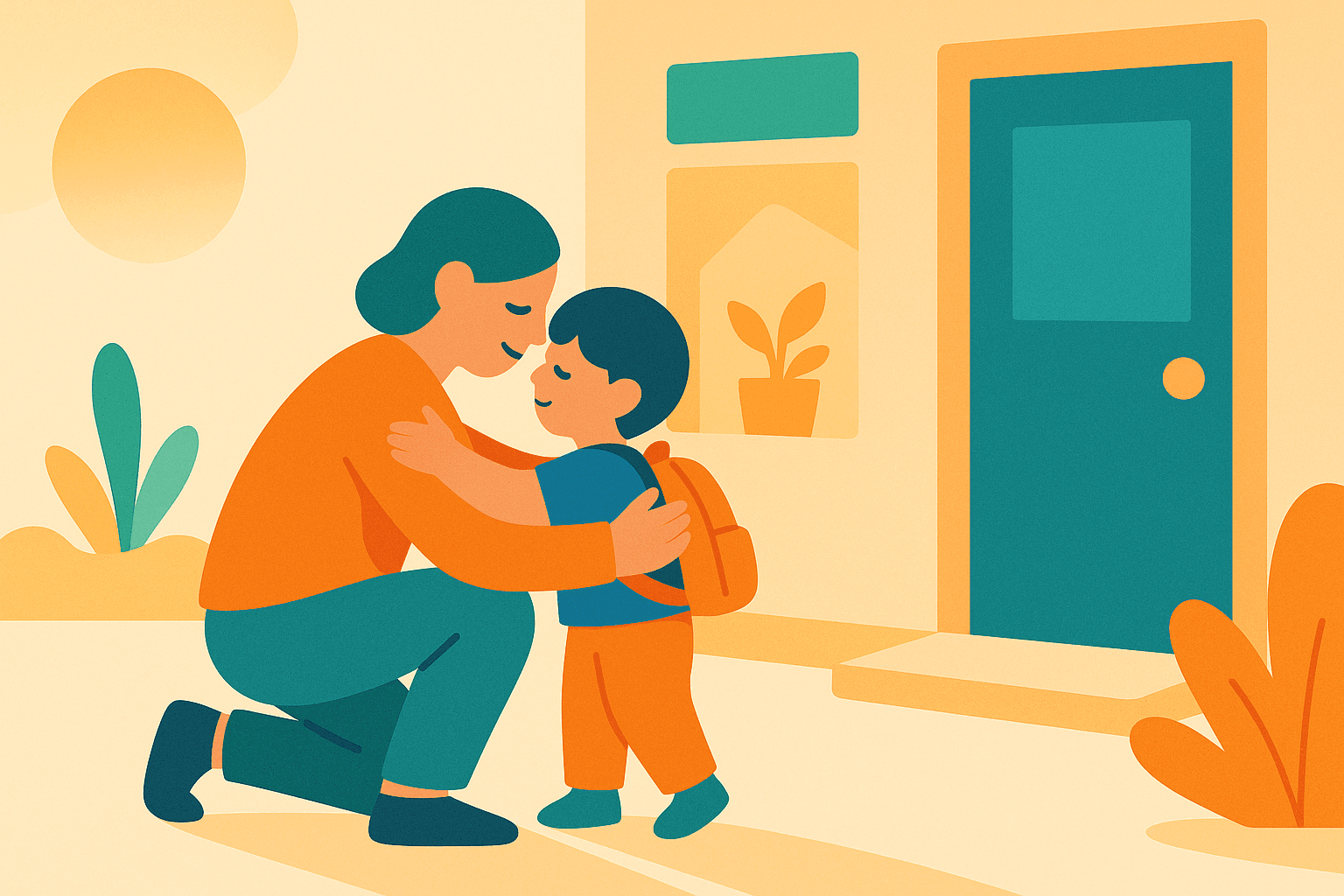
This doesn't mean tear-free drop-offs from day one — that's rare for anyone, including plenty of adults on their first day of a new job. It means your child can be left with a trusted adult (a grandparent, a babysitter, a friend) for an hour or two without prolonged distress that doesn't resolve.
That capacity for brief separation is the emotional foundation preschool is built on. It tells us your child has already started to internalize the idea that when a trusted adult leaves, they come back — a concept psychologists call object permanence applied to relationships. If your child has never really practiced this, that's not a red flag; it just means the weeks before enrollment are a good time to start, with low-stakes separations that build up gradually.
2. They're curious about other children
Parallel play — playing alongside rather than directly with other kids — is a completely normal and healthy stage, and most toddlers live there for a while. But if your child is starting to watch, imitate, or approach other children with genuine interest (even if that interest sometimes looks like grabbing a toy out of someone's hands), that curiosity is a strong sign they're ready for a group learning environment.
Preschool doesn't require your child to already know how to share or take turns beautifully. Honestly, that's most of what preschool is there to teach. What we're looking for is the spark of interest in other kids as people worth paying attention to — the raw material our teachers can shape into real social skills over the year ahead.
3. They can follow a simple two-step direction
"Pick up the block and put it in the basket" is a two-step direction. If your child can generally follow along — even imperfectly, even with a reminder halfway through — they have the listening and sequencing skills that make classroom routines manageable and far less overwhelming.
This matters more than it sounds like it should. A preschool day is built almost entirely out of small sequences: line up, then wash hands; finish your puzzle, then put it back on the shelf. A child who can hold two steps in mind has an easier time riding along with the rhythm of the day instead of feeling constantly lost inside it.
4. They're communicating their needs
Your child doesn't need full sentences, and they certainly don't need to be an early reader. But they should be able to communicate hunger, tiredness, or discomfort in some consistent way — words, signs, gestures, or a reliable behavior a caregiver can learn to read — so that a new caregiver can understand and respond without you there to translate.
If your child is a late talker or still relies heavily on gestures, that's worth mentioning to your child's pediatrician, but it's rarely a reason to delay preschool on its own. Language often accelerates in a group setting, surrounded by peers and teachers narrating the world all day. We've seen it happen more times than we can count.
5. You're ready, too
This one gets overlooked constantly, and it matters just as much as anything on this list. Preschool readiness isn't only about your child — it's about your family's readiness to trust a new routine and a new set of adults with something precious. If you've found a program where the teachers feel like partners rather than strangers, that confidence is worth as much as any developmental checklist.
It's also completely normal to feel a little grief about this transition, even while knowing it's the right move. Your baby is becoming a kid with a life outside your house. That's a good thing, and it's still allowed to feel bittersweet.
What readiness doesn't require
A few things parents worry about that genuinely don't matter for preschool readiness: potty training (most programs, ours included, support children still in diapers or actively training), knowing letters or numbers (that's what preschool is for), and being verbally fluent (see above — language often blooms once they're immersed in a classroom of talking, singing, story-reading peers).
If your child is missing one or two of the five signs above, that's not a stop sign. It's information. A good preschool program meets children where they are and builds from there — it doesn't require them to already have the skills the year is designed to teach.
What our preschool classroom actually looks like
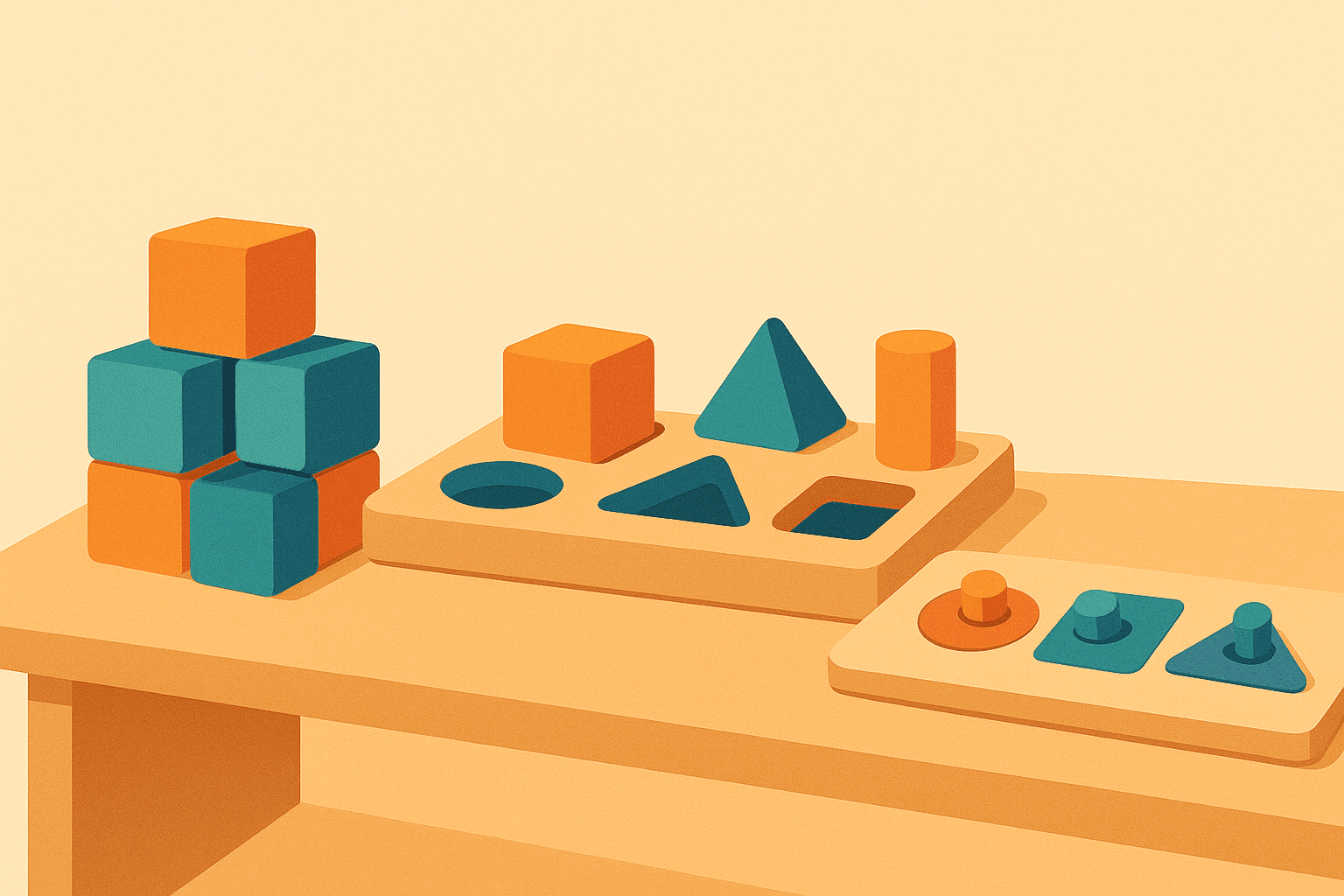
Our Preschool program (ages 3–4) is Montessori-inspired, which in practice means purposeful, hands-on materials on low shelves, longer blocks of uninterrupted work time, and teachers who follow each child's interests instead of running a one-size-fits-all worksheet. Letters, numbers, and shapes show up everywhere — cooking projects, art stations, science trays — so learning rarely feels like a drill.
If you're weighing this decision, we'd genuinely love to have you tour our preschool classroom and talk it through with our lead teachers. No pressure, no sales pitch — just an honest conversation about whether this is the right next step for your specific child, on their specific timeline.
Written by The Village of Learning Team
Let's find the right classroom for your child.
Tours are free, unhurried, and the best way to see if The Village of Learning feels like home. Spots fill quickly — reach out today.
Or call us at (225) 390-1136